
Why Remodeling Timelines Matter More Than You Think
One of the first questions homeowners ask when they start thinking about a remodel is simple: How long is this going to take? It's a fair question, and honestly, the answer depends on a lot of factors — the scope of work, material availability, permit requirements, and even the time of year you start your project.
If you're planning a kitchen or bathroom remodel in West Palm Beach, understanding the realistic timeline before you commit can save you from frustration, budget surprises, and unnecessary stress. At Highland General Contractors, we walk every client through a detailed schedule before work begins, and we think every homeowner deserves that kind of transparency.
Let's break down what a typical remodeling timeline looks like from start to finish so you can plan with confidence.
Phase 1: Design and Planning (2–4 Weeks)
Before anyone picks up a hammer, there's a critical planning phase that sets the tone for the entire project. This is where you'll make decisions about layout, materials, finishes, and fixtures. If you're working with a contractor who handles design and build — like we do — this phase moves more efficiently because you're not coordinating between multiple companies.
During this stage, you'll typically:
- Meet with your contractor to discuss goals, budget, and must-haves
- Review design concepts and floor plans
- Select materials such as cabinetry, countertops, flooring, and paint colors
- Finalize the scope of work and sign a detailed contract
Rushing this phase is one of the biggest mistakes homeowners make. Taking the time to get the design right prevents costly change orders later. For homeowners in Palm Beach Gardens, Wellington, and the surrounding communities, we recommend starting this process at least a month before your ideal start date.
Phase 2: Permits and Material Ordering (2–6 Weeks)
Here's where South Florida projects can differ from remodels in other parts of the country. Palm Beach County has specific permitting requirements for structural changes, electrical work, and plumbing modifications. Your contractor should handle the permit application process, but it's important to know that approval timelines can vary.
Simultaneously, materials need to be ordered. Custom cabinetry, for example, can take four to six weeks to fabricate and deliver. Specialty countertops and imported tile may have similar lead times. A good contractor will coordinate these orders so that materials arrive on schedule and don't cause delays once construction begins.
Pro tip: If you have your heart set on a specific material, ask about lead times early. Supply chain delays still affect certain products, and knowing this upfront helps you make informed decisions or choose readily available alternatives.
Phase 3: Demolition and Rough Work (1–2 Weeks)
Once permits are approved and materials are staged, the physical transformation begins. Demolition is often the most dramatic phase — old cabinets come out, walls may be opened up, and outdated fixtures are removed. It can feel chaotic, but it's an essential step.
After demolition, the rough work begins. This includes:
- Framing adjustments or wall modifications
- Plumbing rough-in for new fixture locations
- Electrical wiring for updated lighting, outlets, or appliances
- Any necessary HVAC adjustments
Each of these trades requires inspection by the local building department before the project can move forward. In West Palm Beach and Lake Worth Beach, inspections are generally scheduled within a few business days, but your contractor should build this buffer into the timeline.
Phase 4: Installation and Finishing (3–5 Weeks)
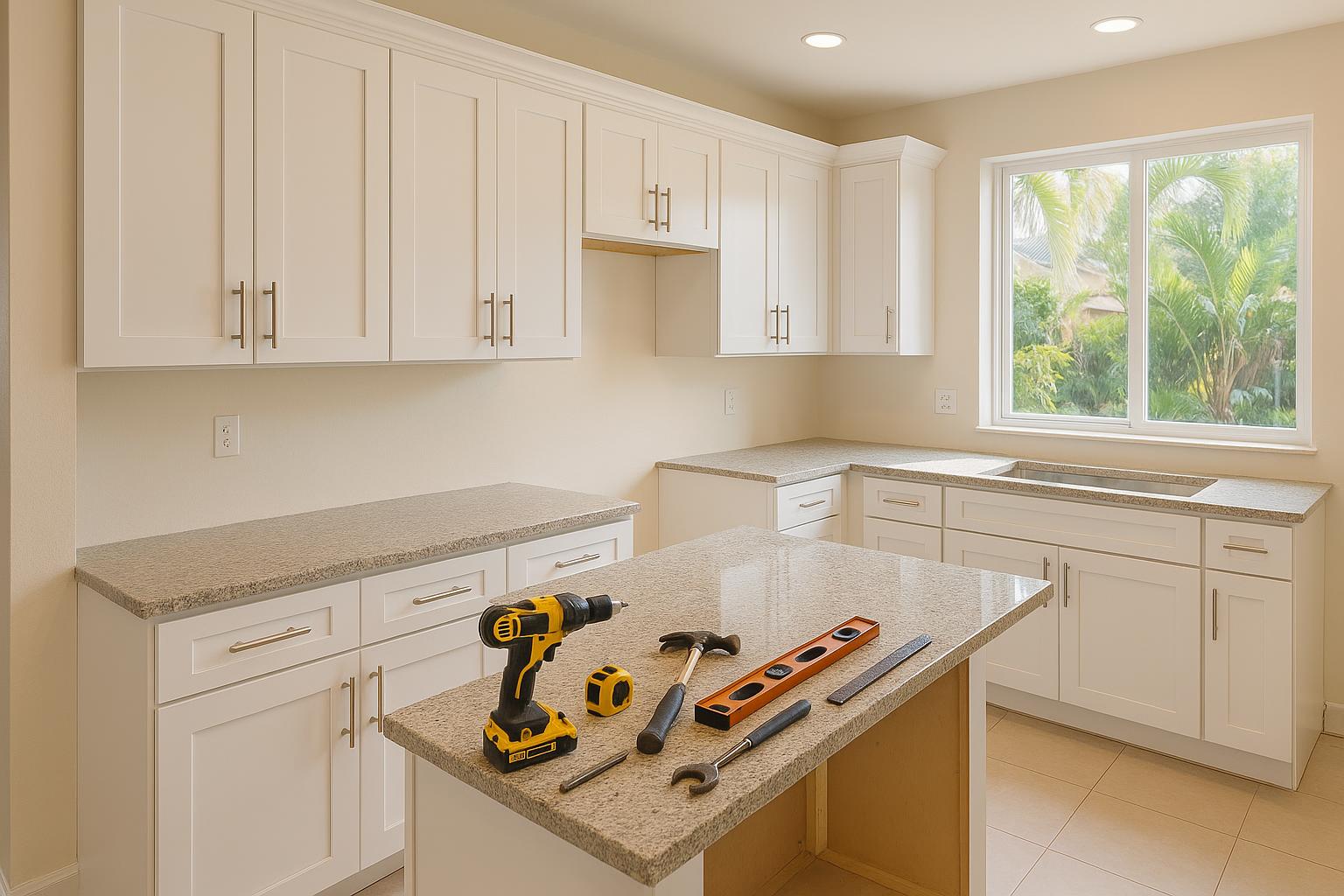
This is where your new space really starts to take shape. Drywall goes up, flooring is installed, and cabinetry is set in place. Countertops are templated and fabricated to fit precisely, which usually requires a separate visit after cabinets are installed.
The finishing phase includes:
- Flooring installation — tile, luxury vinyl, hardwood, or whatever you've selected
- Cabinet installation and hardware placement
- Countertop installation and sealing
- Interior painting and trim work
- Fixture and appliance installation
- Final plumbing and electrical connections
For a full kitchen remodel, this phase typically takes three to five weeks. Bathroom remodels tend to move a bit faster, often wrapping up in two to three weeks depending on complexity. Projects involving custom cabinetry or intricate tile work may fall on the longer end of that range.
Phase 5: Final Inspections and Walkthrough (3–5 Days)
Before we consider any project complete, there are two important steps. First, the local building department conducts final inspections to verify that all work meets code. Second, we schedule a detailed walkthrough with you to review every element of the finished space.
During the walkthrough, we check for any touch-ups, adjustments, or items on the punch list that need attention. This is your opportunity to point out anything that doesn't look or feel right. A reputable contractor welcomes this step because it ensures you're completely satisfied before the project officially closes.
Total Timeline: What to Realistically Expect
Adding it all up, here's what most homeowners can expect:
- Bathroom remodel: 6 to 10 weeks from design to completion
- Kitchen remodel: 8 to 14 weeks from design to completion
- Smaller projects like countertop replacement, flooring installation, or interior painting: 1 to 3 weeks
These ranges assume no major surprises behind the walls — like hidden water damage or outdated wiring that needs to be brought up to code. An experienced contractor will account for potential issues in the initial estimate and communicate openly if anything unexpected arises.
Seasonal Considerations for South Florida Homeowners
In our area, the remodeling calendar has its own rhythm. Many homeowners in Royal Palm Beach, Riviera Beach, and throughout Palm Beach County prefer to schedule projects during the fall or early winter months when seasonal residents are away and contractor schedules tend to be more flexible. Starting your planning process in the summer gives you plenty of time to lock in a fall start date.
Hurricane season — June through November — is another factor to consider. While interior remodels aren't directly affected by storms, permit offices and supply chains can experience temporary slowdowns after a major weather event. Planning ahead and keeping a flexible mindset goes a long way.
Set Yourself Up for a Smooth Remodel
The best thing you can do as a homeowner is start the conversation early. Whether you're dreaming about a modern kitchen with custom cabinetry or a spa-like bathroom retreat, having a clear timeline helps you budget, plan around your daily routine, and avoid the stress that comes with uncertainty.
At Highland General Contractors, we've guided homeowners across West Palm Beach and the surrounding communities through every phase of the remodeling process. If you're ready to start planning, we'd love to walk you through what your specific project timeline would look like.